
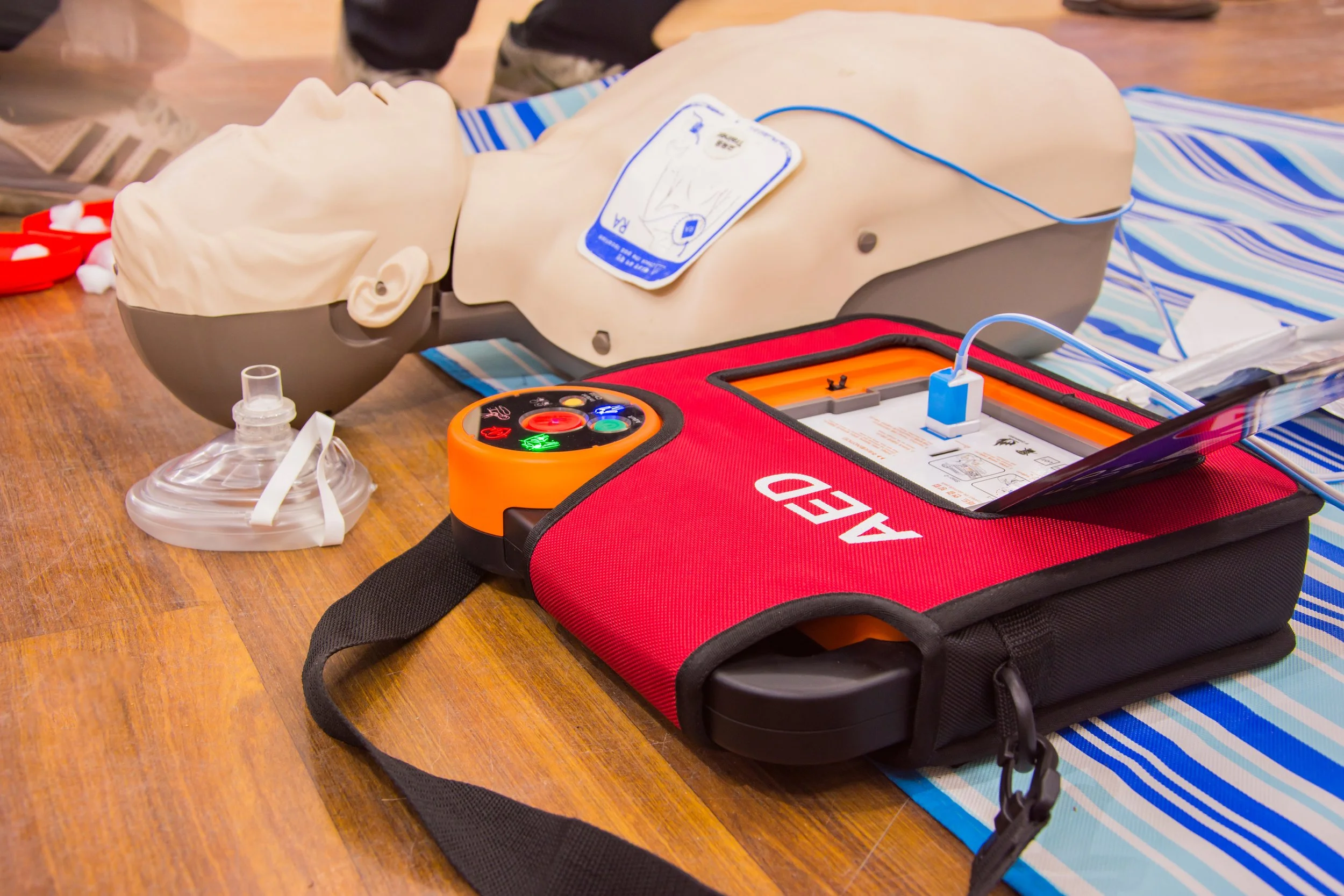
AEDS Save Lives
According to the American Red Cross, sudden cardiac arrest is the leading cause of death in the United States, and over 350,000 people this year alone will suffer from one. During a medical emergency like a cardiac arrest, the primary way to restore a regular heart rhythm is by using an Automated External Defibrillator (AED). An AED is a portable medical device that analyzes the heart’s rhythm and delivers an electric shock to restore a heartbeat during a sudden cardiac arrest.
During any cardiac arrest emergency, call 911 for assistance as soon as possible. However, for each minute there is no heartbeat, the odds of survival decrease by around 10 percent. Therefore, having access to and being able to use an AED are vital. Although first responders do arrive as soon as they can, it simply isn't fast enough. The average response time is six minutes; by that point, someone’s odds of survival could have decreased by 60 percent before paramedics arrive (American Red Cross). Having access to an AED could very well be the difference between life and death in certain situations. This is why it is important to have AEDs accessible at all times in all places, especially schools.
AED Location
AED placement in a school setting should be intentional and strategic. Gathering spaces are an important place to keep an AED because they are high-traffic areas. For example, cafeterias, auditoriums, gyms, large meeting rooms, and staff break rooms are all locations where not only people gather, but it is also easier to access and retrieve the AED. Along with these settings, any physical activity area should always have an AED easily accessible, such as weight rooms, football fields, natatoriums, and tracks. Strenuous exercise can sometimes elevate the risk of dangerous heart rhythms or trigger undiagnosed heart conditions in people (National Library of Medicine). Therefore, it is extremely important for all athletic facilities to have an AED present and available to keep athletes and spectators safe.
Accessibility
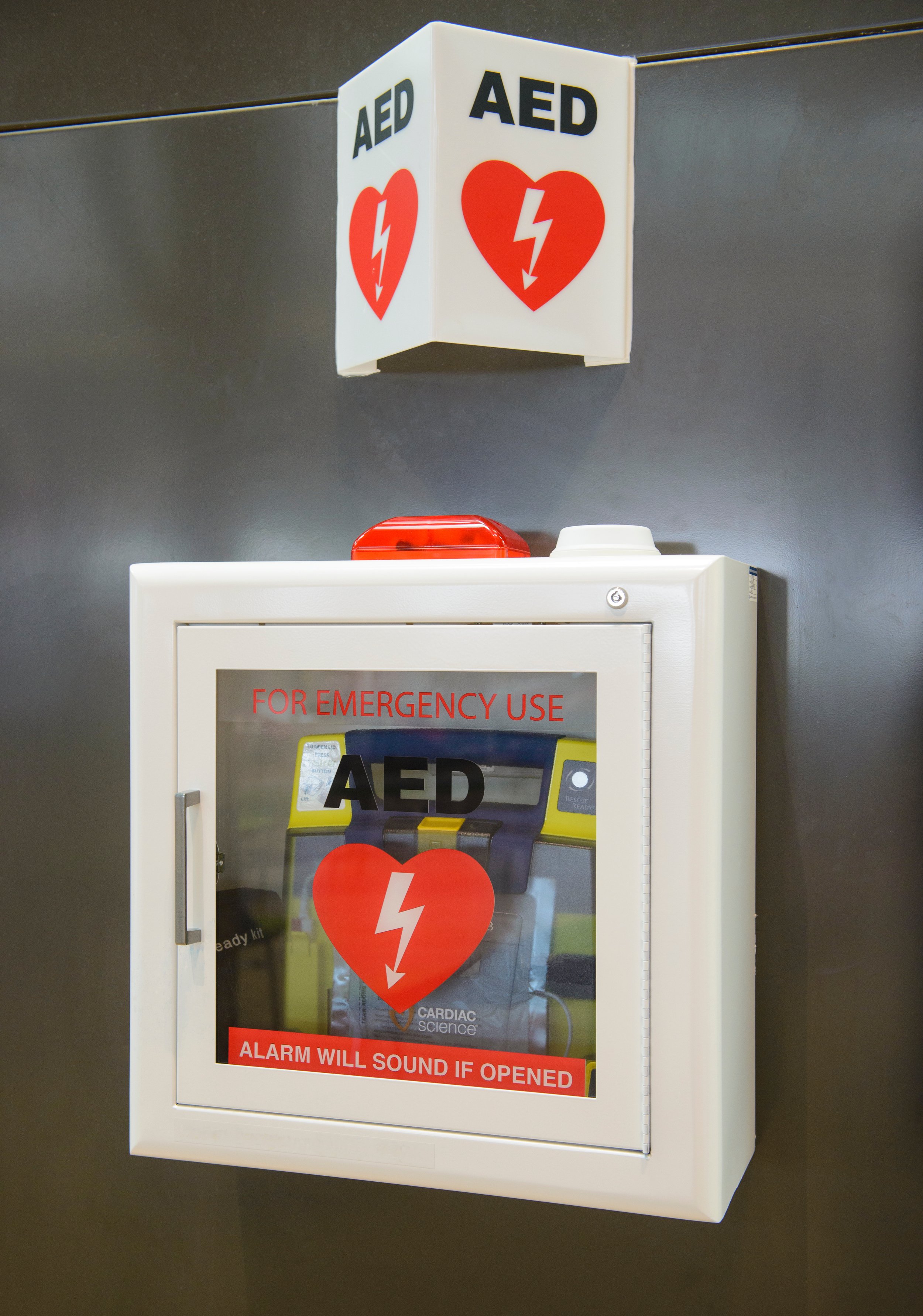
AEDs should be mounted at eye level in high visibility areas. Along with this, AEDs should have clear and visible signs pointing towards the device so people can locate it from a distance. AEDs need to always be accessible in case of an emergency; therefore, they should never be in places that are usually locked, like private offices or storage closets. While places like these might be available during the school day, they could be closed during after-school hours and events. AEDs need to be accessible 24/7, not just during school hours.
Keeping everyone safe, including parents and visitors
Schools see many different types of people throughout the day, especially students. Dozens of teachers and other school staff are also in the building, and let’s not forget about parents and grandparents who come along for events like school concerts, science fairs, and plays. Some schools are even election sites for the public, creating thousands of additional visitors. Needless to say, schools don't only house children; they are a hub for people of all different ages. Therefore, it is important to always have an AED accessible in case someone in any of those groups listed above needs it.
You never know when there might be a medical emergency, and they can occur when you least expect it; that is why it is crucial to have an AED accessible at all times in a school building. Using an AED can heavily impact the outcome of a cardiac emergency, which is why it is necessary to have it within schools in order to keep students, teachers, and visitors safe.
Ongoing MAINTENANCE
Maintaining an AED
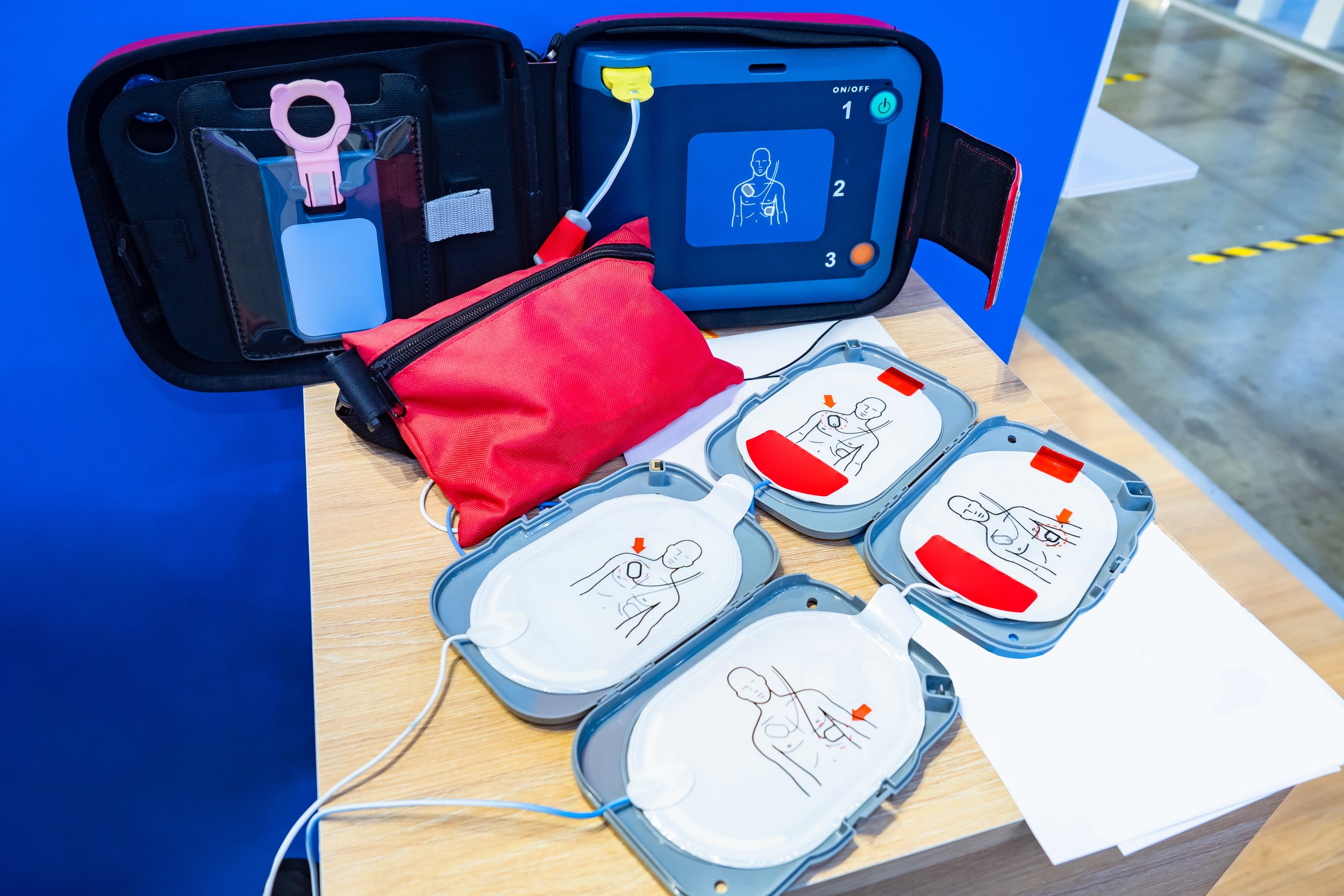
In order to make sure an AED is still properly working and available for use, it is important to check it once a month. When checking it, look to see if the status indicator button is flashing green, which indicates it is ready for use. It is also important to make sure the AED is not making any unusual warning sounds, like chirps or beeps. These could indicate an error, and it may not function properly, whether components need to be replaced or batteries need to be charged. Lastly, it is also important to check the rescue kit that comes with the AED to make sure everything is in there. In the kit, there are scissors, a razor, a face shield with a one-way valve, exam gloves, and a small towel. When all of these steps are checked, then it should be logged and documented so that it is known when the monthly inspection was done. It is essential to have the AED always prepared, working, and ready.
AED Training
In an emergency, someone does not have to be trained or be certified to use an AED. AEDs are built and designed for people who are not in the medical field; that way, anyone can use it. Once turned on, the AED gives live, step-by-step directions with audio prompts and images. However, it is still a good idea to take a training class about how to use AEDS. Training will also cover CPR and how to combine chest compressions with AED use, which helps keep oxygen flowing to the brain. Being trained in both CPR and how to use an AED can ensure it is done properly and most effectively. Although not required, AED training helps people become more comfortable with how to use the device and prepares them for if they are ever in an emergency medical situation.
________
Check Out Our Vendor Partners!
School Health

When you choose School Health as your health supplies provider, you get a business partner who will help you every step of the way - from product selection and support, to training and customer care.
Ever since our founding in 1957, we have been dedicated to helping school-based health professionals keep their students healthy, both physically and mentally.
Our comprehensive offering includes health supplies, sports medicine equipment, physical education equipment, early childhood products, and special needs aids.
We have one of the largest selections of health supplies from the most trusted brands, and a professional and knowledgeable staff to help you through the entire process. We understand service!
School Nurse Supply
For nearly three decades, School Nurse Supply has done one thing - served the school health office. Not the whole school. Not every department. Just the nurses, health coordinators, and early childhood professionals who show up every day to keep kids safe and healthy. Every product we carry was chosen with your work in mind. Every deal we offer was worked for, not stumbled upon. And every time you call, a real person answers. We're a small, dedicated team that genuinely cares about the professionals we serve and the children they look after - and that's been true from day one. We're glad you're here.
Medline
Our vertically integrated business model delivers the best total value through world-class products, a resilient and highly efficient supply chain, and differentiated clinical solutions. An integrated suite of technology solutions connects it all, providing greater visibility, efficiency and control across all points of care. Our ability to provide significant savings on our products and services aligns us with the evolving needs of our customers.